Blog 2020 · Typography and Photography

The Clever Use of Typography and Photography

Original Magazine Spread

I chose this article from the Via Magazine, March-April 2020 edition, page 20. It is written by Trina Enriquez with the photograph taken by Nick Lake. The link to view this article can be found here: https://www.nxtbook.com/nxtbooks/aaavia/viaoregon_20200304/index.php#/p/20

This picture and the article appealed to me because I love waterfalls, and this magazine has many familiar places featured. The raw power of the waterfall is in contrast with the comfort I feel when I hear the roar and I like to learn and visit about all of the local falls.

Typography Identified

The headings on the first page, and the headings on the second page are in Sans Serif. Sans Serif is a font that means “without” the ends of the strokes.  For example, a lowercase f would not have any bottom horizontal line.  Sans Serif looks very clean without any extra flourishes and sends a strong message.  It is direct.  The typeface is always “monoweight” meaning all the strokes are even and have the same thickness from the top of the letter to the bottom. Although it is “monoweight”, a variety of weights from very bold to very thin and light. It is relatively new compared to Oldstyle.

The quotations in the columns are Oldstyle and is used for lots of text, especially is smaller size.  Oldstyle is based on hand lettering and includes serif’s or a small stroke at the end of the main stroke.  For example, the short angled stroke at the top  of the  lowercase f or they curved strokes called “bracketing” at the end of the  s.  It also has varying weight from thick to thin in the stroke itself. It is very easy to read despite  the extra strokes.

Typography Contrasts

The larger text including the title of the series, “On the Road”,  and the first and second page paragraph headers are Sans Serif and are large font size. The smaller lead sentence is also Sans Serif but has a much thinner weight and the spacing or kerning between the characters is slightly larger. 

This contrasts with the quotations below in Oldstyle. It immediately tells me I have more text to read, so it is smaller and easier to digest.  The amount of text has two columns on the first page, and three on the second.  My eyes are drawn to the quotes with the familiar Oldstyle, but the name of the person giving the quote is in Sans Serif and is in all caps. The size of the text also contrasts, as I leave the top of the page with the most important text in large font, I am drawn down to read the rest of the columns.  The user giving the quote is listed, but the importance is what they are saying, not so much who said it.

Photograph Analysis

The photographer uses the Rule of Thirds by having the waterfall itself take up the top two-thirds of the picture. The person standing in the middle horizontal grid, just slightly off-center adds perspective to the size of the waterfall. The falling water itself is the leading lines down to the person standing as well as the log the person is standing next to. The depth of field is focused on the red jacket on the man’s back which is sharp and clear and the waterfall itself is slightly out of focus.

Alternative Photos

Here are my three images that could be swapped in place.

Although I didn’t have a person standing in front of the Idaho Falls, I used the surrounding scenery to help give the perspective.  For example, showing the water itself as a leading line with the stacked rocks still draws the eye from top to bottom. The depth of field in pictures has the focus on the waterfall itself with the foreground slightly out of focus for the first picture and for the second and third, the focus is on objects around the water. I also used the overhanging trees to frame the picture. Finally, the waterfall is in the top or bottom of the picture instead of centered.

Conclusion

Overall design of the magazine article pleasantly lead me throughout. When I saw this article for the first time, my eye was instantly drawn to the top left hand side of the spread.  The bold white face of Sans Serif made the simple yet powerful statement that I would see things while traveling.  My eyes then traveled down the water to see the person in the focus in front of the waterfall.  This image was the clearest and I could identify being that person standing in front.  The quotation bubble in green grabbed my attention and the next page was easy to follow again from top to bottom with the heavier weight Sans Serif typeface with the most important information down to the Oldstyle typeface of the quote, to the thin weight of the name of the person giving the quote.  The simple design never distracted from the beauty of the waterfall picture.

Blog 2020 · Reverse Engineer

Kellogg’s Cereal Ad Full and Satisfying by Design

Simple Yet Noticeable

Kellogg’s developed this ad campaign in 2008 to promote new flavors of the classic cereal. Leo Burnett created a full campaign for every flavor. The original ad can be found here: https://www.adsoftheworld.com/media/print/kelloggs_strawberry

Let’s look at this simple layout for five design elements including contrast, repetition, alignment, proximity and color that make it noticeable and pleasant to read. In this example, I chose “Strawberry”.

Contrast

The contrasting images from the clear mini wheat to the slightly blurry reflection draws the reader in.

Notice the contrast of the text used throughout the ad. The comic style bubble has hand-written text. The information about the product is more formal, yet the tag line is in a casual font. Each carries a distinct message. The comic bubble conveys humor, the product description clarity and the tag link is catchy.

Repetition

The overall color of pink gives the reader the idea of the flavor of mini wheat. In the overall campaign, each flavor has a different color; pink for strawberry, blue for blueberry, brown for cinnamon.

The use of the comic bubble with a humorous message for each color makes it fun to seek out every ad if in a magazine. It also ties in all the separate ads.

Alignment

The ad has a pleasing rule-of-thirds spacing generally used in photos. This brings the readers eye tot he center where the most important message is.

Down in the bottom third, the product description and tag line are flush right to the cereal box image.

Proximity

The mini wheat and the image are grouped together in close proximity. This organizes the actions in the images so the reader understands they belong and are part of the humor.

The text is close to the cereal box picture helps the reader understand this isn’t part of the humor above, rather explaining what the product is.

Color

The monochromatic color of pink clearly carries the message of the flavor. The light hues can be seen at the top of the page and become slightly darker.

The dark, solid hues of pink emphasis the mini wheat. The text is easy to read in the darker pink, but doesn’t overwhelm the center image.

Conclusion

Overall, each of the five elements compliment the others. The use of the monochromatic color repeating in the background, image and text is subtle and soft, yet the reader knows what flavor the cereal is. There is enough contrast to draw the eye to the different sections, and the proximity makes it easy to understand the differences of the cartoon theme and the product description. In this case, simple is clean, pleasing and still very distinct!

Comm 111 April 2019 · Photography

My Favorite Hobby I Need Help With – Photography

My dream in high school was to capture the perfect story on black and white film. This one picture would convey all of the emotions I felt deeply at the time; wanting to be admired, yearning for wisdom, and of course making it big financially! In my Photography 101 class, I learned the same rules thirty years ago for taking a great picture of rule -of-thirds, leading lines, and depth-of-field. As l looked through my photos, I realized that I needed the refresher and lots of practice!

Rule of Thirds – 

Professional (those making money)

Photo by Steven Olmstead Photography
https://travel.usnews.com/Jackson_Hole_WY/Things_To_Do/Grand_Teton_National_Park_62135/

Amateur (me not making money)

Mount Hood – taken by Maria Poole from an airplane window

Let’s take a look at how the rule of thirds apply to each….


This picture of the Grand Tetons is stunning! The first rule that came to mind was the rule of thirds. Drawing just the horizontal lines across the picture, the mountains, trees and reflection are all within a third of the picture. A great way to focus on each separately while enhances overall.

The focal points of tree line and the bottom of the mountains is where the top vertical and horizontal lines meet, and the beginning of the reflection is found where the bottom lines meet.

In my photo, the top of Mount Hood is at the intersection of the lines, and it is easy to follow down the mountain to the clouds. Each element of sky, snow-covered mountain, and clouds are seen.

Leading Lines

Professional (those making money)

Photo by Jim Zuckerman
https://www.photovideoedu.com

Amateur (me not making money)

Amsterdam with friends (although I loved this picture for the lines, I realized it was very blurry so felt I needed to take another picture for my example) Photo by Maria Poole
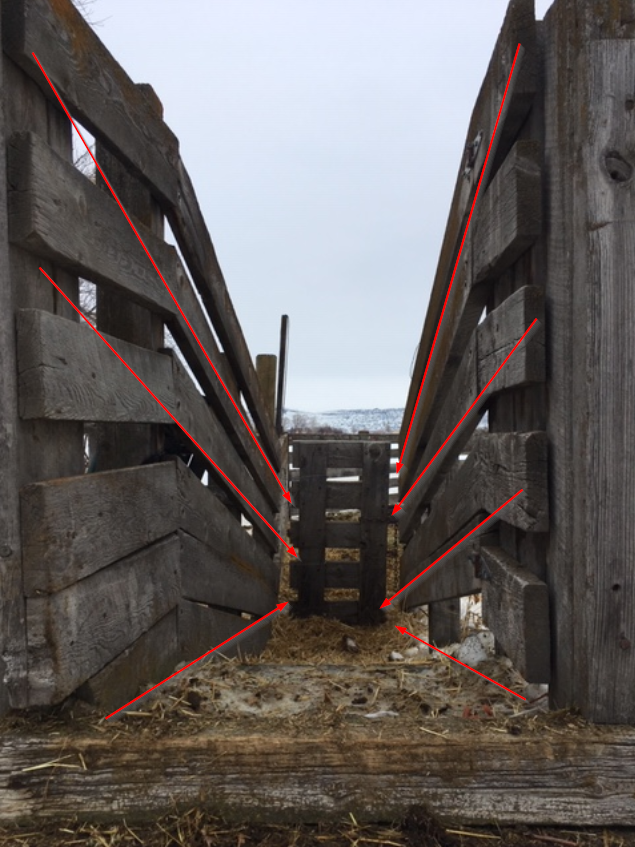
Loading Chute by Maria Poole

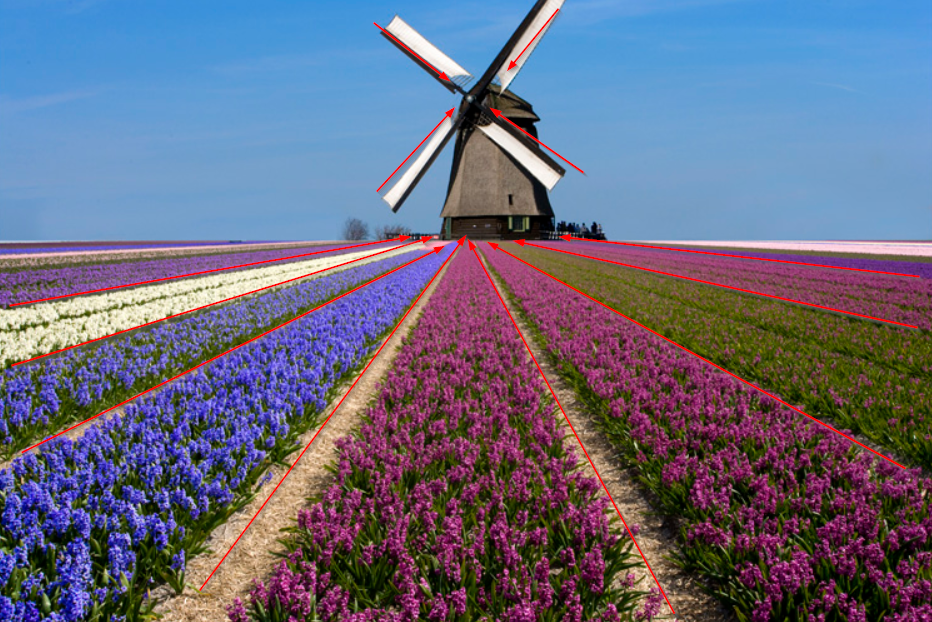
The elements of leading lines are in each.

The rows of flowers naturally take our eye to the windmill. This also gives us a feeling of depth perception showing distance. The windmill arms also help guide our eye to the tower of the windmill. Having the lines also be in contrasting colors captures attention.

The loading chute is normally not very interesting, it is full of straw, and cow pies. I realized that it does become much more striking if I took the picture from the top looking down to the gates. The lines of the fence naturally draw your eye down to the center. The spaces on the slates of the center gate contrast nicely with the diagonal lines.

Depth of Field

Professional (those making money)

Photo by Rob Dunsfield
https://iphonephotographyschool.com/focus-tips/

Amateur (me not making money)

Plant Photo by Maria Poole

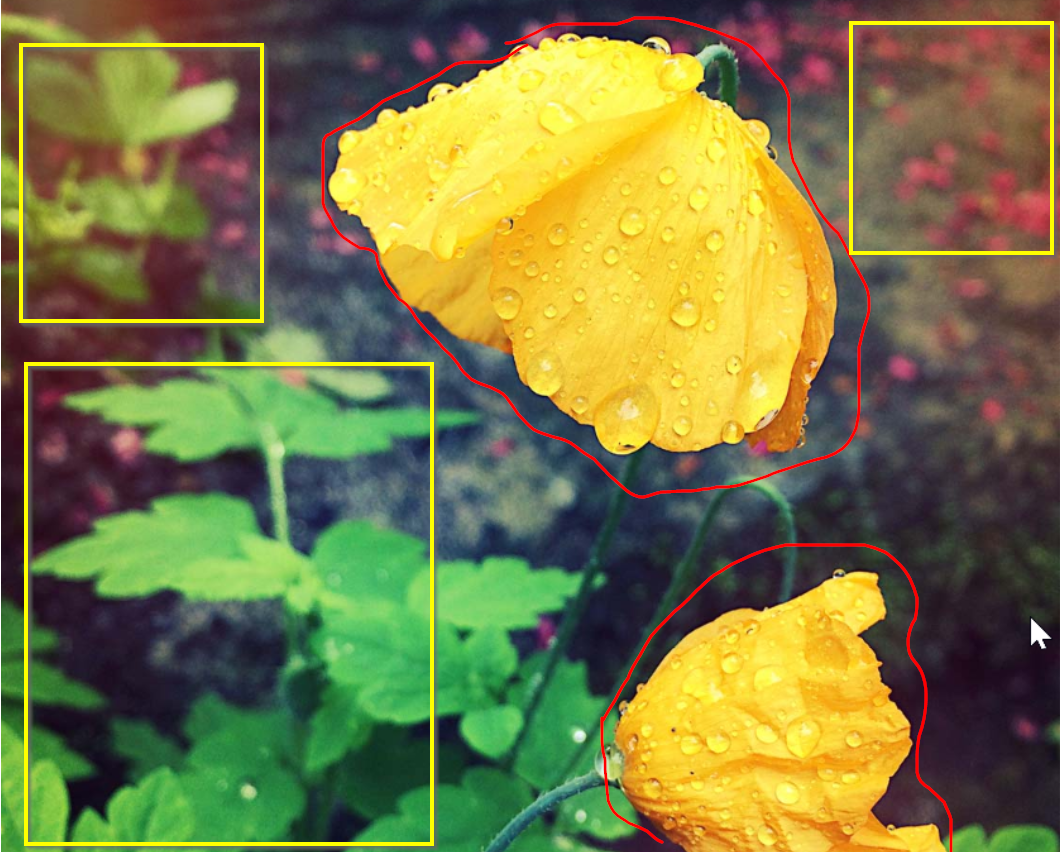
Let’s look closer at what is in and out of focus…

The focus is on the yellow poppies and the individual drops of rain on the petals. This enhances the fragility of the drops that can slide off at any minute. By showing these instead of the background behind, we can enjoy the uniqueness of each different shaped drop.

I wanted to focus on the pink spots on this plant to show the variegated colors. The rest of the plants and my living room beyond were not what I wanted to highlight, so purposely blurred. The individual leaves shows how thick and becoming this small plant really is.

What I learned besides needing help – 

There are many, many other elements of photography including lighting, framing, and general composition. However, with just these three, I can get the help I need! The rule of thirds is what I think of while pointing my IPhone at scenery. The leading lines is a great way to show exactly the element in the picture I want people to see. I learned something new with my IPhone, too, being able to have depth of field to make small details more interesting.

Comm 111 April 2019 · Design · Reverse Engineer

Varied Font Styles Draw Attention

Reversed Engineering Post – Typography

Introduction –

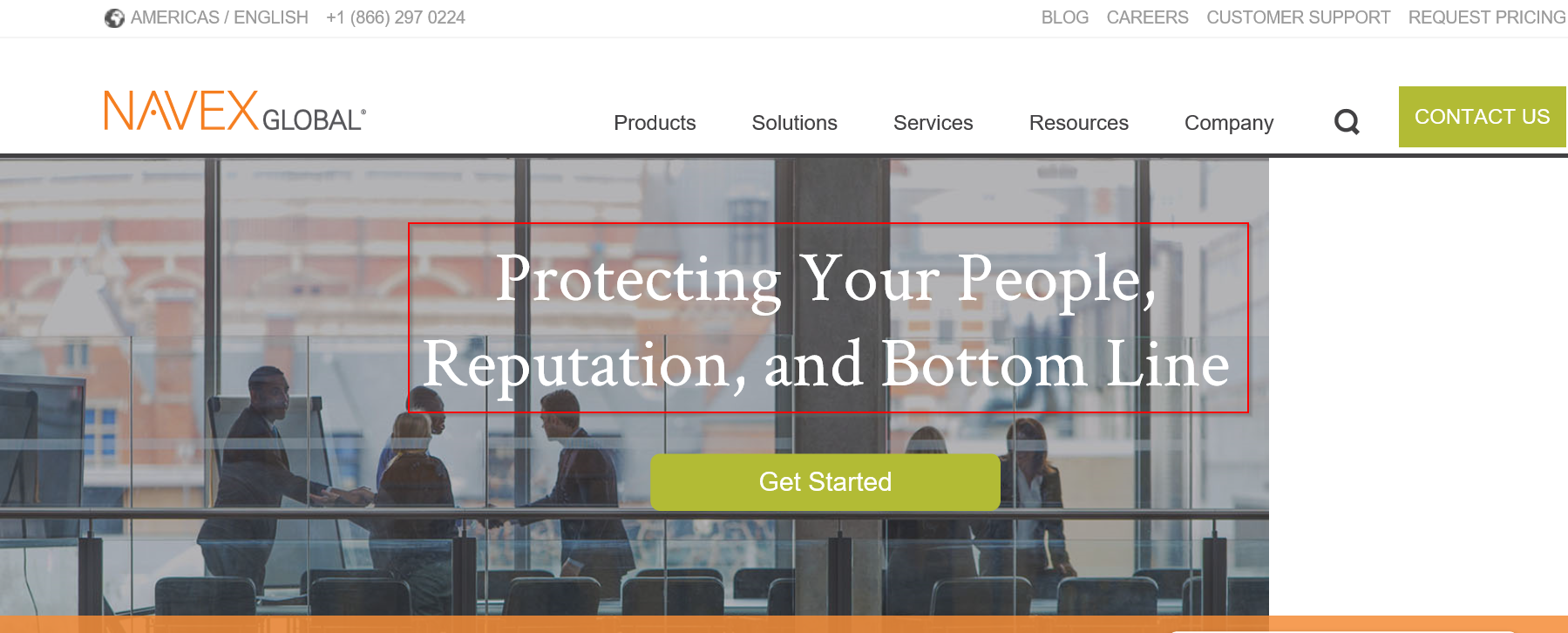
I am using my company’s website as my example. NAVEX Global is a software company specializing in ethics & compliance. This is a screenshot from www.navexglobal.com and was created by our amazing Marketing team who at the time of this was headed by Chris Morton, Director of Marketing. I am always proud to direct our clients to the corporate website because its modern design and easy to use navigation.

The use of different font types attracts attention as well as the white space surrounding the main mission statement in white. The green “Get Started” buttons beg to be clicked on.

First Font Style – OldStyle

The white mission statement or tag line is right aligned on the website. The font is Oldstyle and is very professional with the stroke marks mimic brush marks. This font is easy to read yet is distinguished.

Second Font Style – Sans Serif

The smaller type surrounding the main tag line and the menu items at the top are in Sans Serif. The mono weight is very simple and even from black to white are distinctive without any serifs. This font seems to be very common in digital formats, and are used many times over in the website. The logo in the top left actually includes a decorative style using a dot instead of a line for the letter A.

Contrast between the fonts

The serifs of the Oldstyle have an elegance to the letters showing to me that the tag line should draw my attention first. It’s professional look elevates the message. The white color against the picture background make it stand out without overwhelming the reader. The diagonal stress on the o’s are noticeable at this size of font.

The smaller Sans Serif font shows contrast by having the same weight of the letters. Without the serif’s there is less emphasis on reading, and more on invitation of clicking. The action tabs with the green and with text makes it easy to see where to click for more information. The black menu items at the top still offer information if needed, but the eye is drawn to the green.

The logo showing the NAVEX in decorative style and in orange helps draw attention to the name. Global is used in many company’s names, but NAVEX is unique and memorable.

Conclusion –

The different font styles show a mature design style intended to draw the reader in. The designer is not afraid to contrast Oldstyle with the Sans Serif font. The use of colors to instruct users to find more information is clever.

Comm 111 April 2019 · Design · Reverse Engineer

M&M’s Yellow by Design

Introduction

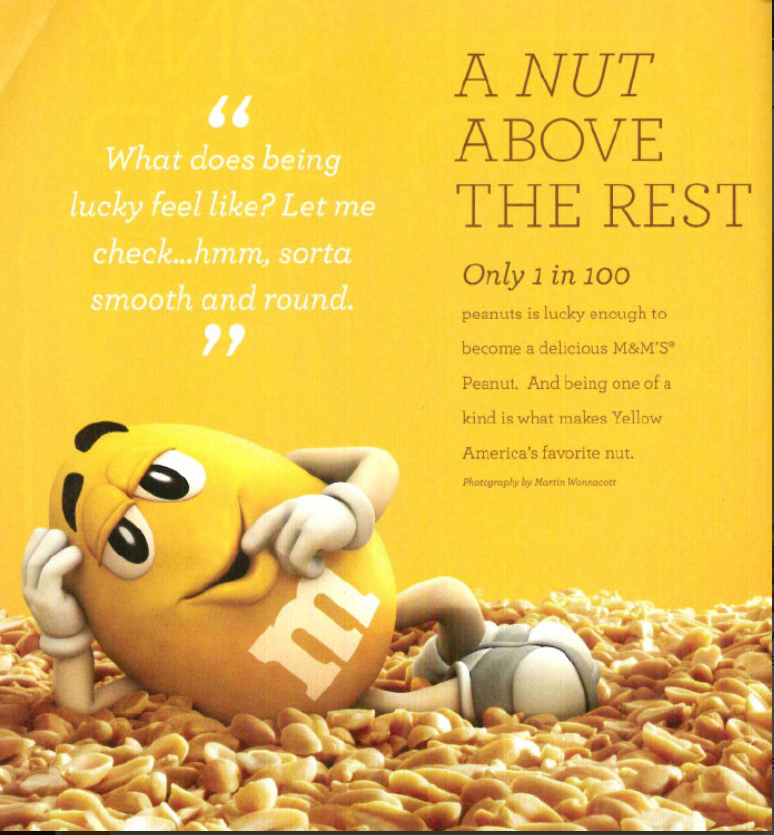
This M&M Yellow Peanut advertisement was listed in the April 2014 issue of Ebony.  I found this on Google images, and this ad was part of an article called “Representations of American Culture in Food Advertisements in Mainstream, Latina, and African-American Magazines”. The photo credit in the image is by Martin Wonnacott.

Proximity

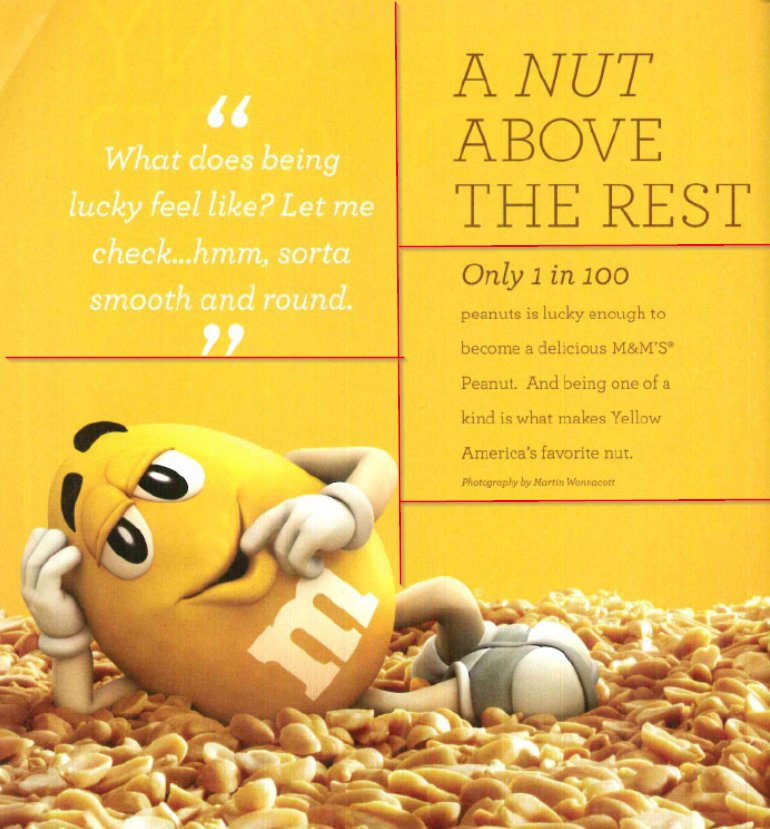
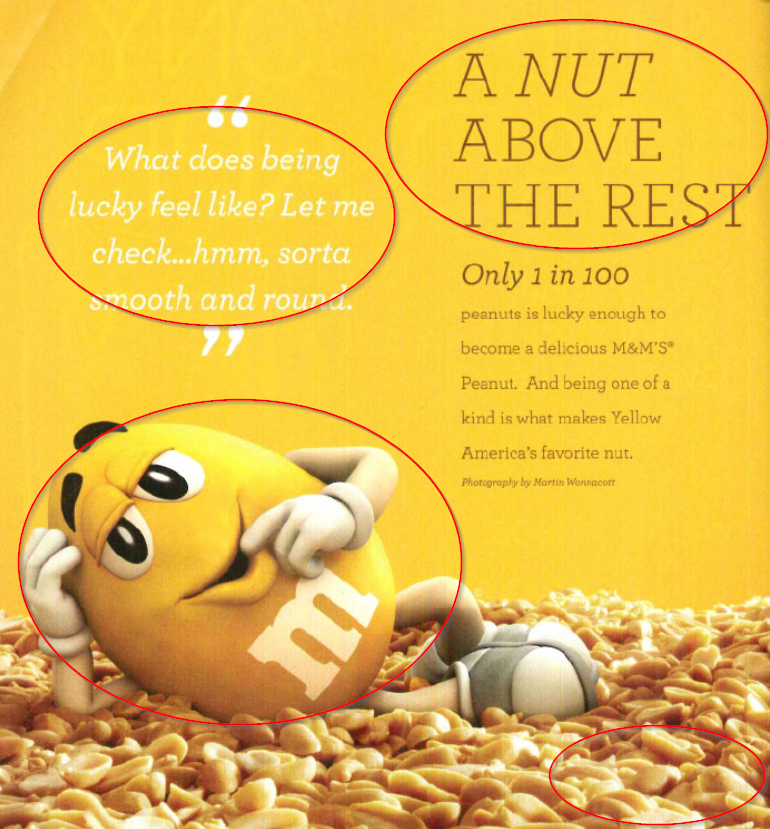
This ad grouped together the tag line of “A Nut Above the Rest” and the description close to the images. The quote was centered about Yellow, the peanut M&M character.

Alignment

The lines of the text are divided into columns, with using center alignment for the quote, and left-aligned for the description column.

Repetition

The use of all one color, with slightly different tints and shades add to the theme. The image of the peanuts that spread across the full bottom help reinforce the type of M&M.

Contrast

The use of the white quote against the yellow background and tying it together with the white of the gloves and “m” on the front make a striking image. The black writing on the right is different to show it is not part of the quote.

Conclusion

This ad was very pleasing to look at. The use of a dominant color reinforced the character, and the play of cartoon with the real images of peanuts made it seem this character was real. Overall, the contrast was simple, and the alignment easy to read.